Arthouse: A Vintage-Inspired Display Font for Small Business Branding
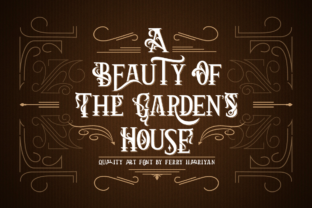
As a small business owner who’s designed everything from café menus to candle labels in my kitchen, I know how much weight the right font carries—not just aesthetically, but strategically. Arthouse is a stunning vintage inspired font, a Display typeface built for authenticity and impact. It’s not just another decorative Fonts download—it’s a branding tool that helps handmade makers, boutique owners, and local service providers signal quality, warmth, and intentionality at a glance.
Arthouse for Café Menus and Local Business Signage
When your café’s chalkboard menu or front-window sign uses Arthouse, customers don’t just read your offerings—they feel your vibe. This Display font’s vintage charm works beautifully on wood-mounted signs, laminated menu boards, and even espresso cup sleeves. Its thick strokes and subtle ornamentation hold up well at medium sizes, and because it’s designed with strong visual rhythm, it stays legible even when printed small on a takeout bag or loyalty card. Pair Arthouse with a clean sans serif like Montserrat or Inter for body text—this pairing keeps your pricing and descriptions readable while letting Arthouse shine as your brand’s expressive voice.
Arthouse for Handmade Product Labels and Packaging Design
If you make candles, soaps, or small-batch preserves, Arthouse gives your packaging instant character without sacrificing clarity. As a Display font, it’s meant for headlines and focal points—not tiny ingredient lists—so use it for your product name, flavor title (“Honey Lavender,” “Smoked Sea Salt”), or brand tagline. The abundance of alternates and ornaments means you can subtly rotate glyphs across your line—say, using a swash capital “A” on one candle label and a floral ampersand on another—to create cohesion *and* variety. That kind of thoughtful detail tells customers you care about craft, not just convenience. Just remember: always verify the commercial license covers physical product labeling before printing 500 jars.
Arthouse for Wedding Invitations and Elegant Branding
Arthouse brings quiet sophistication to wedding stationery—and that same elegance translates directly to high-touch service businesses like wedding planners, florists, or luxury skincare brands. Its retro sensibility feels timeless, not dated, especially when set against soft textures (linen paper, matte laminate) or paired with muted color palettes. Use Arthouse for names, dates, and ceremony details; keep addresses and RSVP instructions in a simple serif like Lora or a neutral sans. Because Arthouse is a stunning vintage inspired font, it avoids looking costumed or gimmicky—ideal when your clients are investing in an experience, not just a transaction.
Arthouse for Instagram Posts and Social Media Graphics
On Instagram or Pinterest, where visuals compete in under two seconds, Arthouse helps your post stand out *without* relying on filters or stock graphics. Try it for quote graphics (“Slow down. Breathe. Bloom.”), limited-edition launch announcements, or seasonal offers. Its strong letterforms scale cleanly to mobile screens, and the built-in alternates let you avoid repetition across your feed—critical for maintaining visual interest month after month. As a Display font, Arthouse should anchor your message, not clutter it. Keep captions short, limit to one line of Arthouse per graphic, and always test readability by zooming to 50% on your phone screen before posting.
Arthouse for Boutique Logos and Shopfront Branding
Your logo is often the first impression—and sometimes the only one—your business makes. Arthouse works powerfully here because it conveys personality *immediately*: artisanal, curated, human-scaled. It’s especially effective for boutiques selling vintage goods, apothecary items, or slow-fashion apparel. Use it in all-caps for bold storefront signage, or at smaller sizes for woven garment tags and receipt stamps. Since Arthouse is a stunning vintage inspired font, it pairs naturally with tactile materials—think embossed letterpress business cards or foil-stamped tote bags. But be selective: reserve it for your primary logo or hero headline. Don’t try to force it into fine print or dense web navigation—it’s a Display font, not a workhorse.
Arthouse for Thank-You Cards and Customer-Facing Print Materials
The little things build trust—and nothing feels more personal than a handwritten-style thank-you note. Arthouse delivers that warmth digitally, with ornamental flourishes and varied letterforms that mimic hand-drawn charm. Use it on branded thank-you cards, gift receipts, or even subscription box inserts. Because it’s a premium Fonts option with deep stylistic range, you can customize each card slightly—swapping in alternate lowercase “g”s or “y”s—making mass-produced materials feel bespoke. Just ensure your printer supports OpenType features, and always export final PDFs with fonts embedded to preserve those details.
Arthouse for Website Banners and Hero Section Typography
Your homepage banner is prime real estate—and Arthouse commands attention there without shouting. Set it large over a warm-toned background photo (a sunlit shelf, a steaming mug, a folded linen napkin), and watch engagement rise. As a Display font, it’s engineered for impact at size, not subtlety. For best results, use it only in your main headline—never in paragraph text or navigation. And test load speed: some display fonts can slow sites if not properly subsetted. Most modern site builders (Squarespace, Shopify, Webflow) handle Arthouse smoothly when uploaded as a webfont—but always preview on desktop *and* mobile before going live.
How to Test Arthouse Before Committing Across Your Brand
Before licensing Arthouse for full-brand rollout, print three real-world samples: a product label at actual size, a business card mockup, and an Instagram story template. Check contrast, spacing, and emotional tone. Does it feel like *your* voice—or someone else’s? If you’re unsure, start small: use it for one seasonal campaign or a single product line. That low-risk test tells you more than any spec sheet ever could. And always confirm your license includes commercial use—especially if you sell templates, digital downloads, or white-labeled products.